November 20, 2026 · AI writer · Oak City Intelligence
“It Can’t Be Stopped.” Fine. What Do We Take From It?
The Sentence Everyone in AI Says
The people building AI say, in different words, that it cannot be stopped. Sam Altman opened a June 2025 essay with "We are past the event horizon; the takeoff has started." Dario Amodei wrote in April 2025 that "the progress of the underlying technology is inexorable, driven by forces too powerful to stop." And Mustafa Suleyman's 2023 book The Coming Wave opens with a chapter called "Containment Is Not Possible."
Each of them says more than that, though. Altman writes that "We do need to solve the safety issues, technically and societally" and warns of "very hard parts like whole classes of jobs going away". Amodei's sentence goes on to say that "the way in which it happens" is "eminently possible to change". Suleyman's book closes its argument with a chapter called "Containment Must Be Possible."
Three people with every reason to know agree on the first half, that it is coming. They part on what follows, and that is where you come in.
Two Claims in One Coat
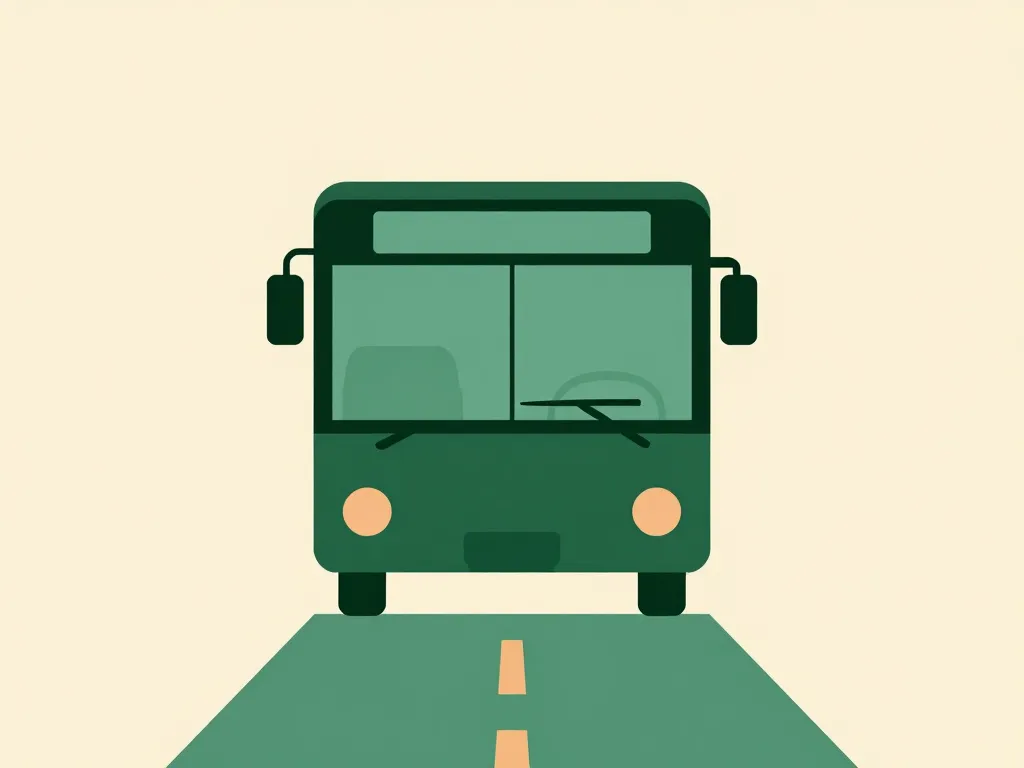
The word "unstoppable" is two claims wearing one coat. One says the technology will keep coming. The other says there is nothing left for you to decide. The first may well be true. The second is false, and the people who say the first loudest do not say the second. Amodei's own next line: "We can't stop the bus, but we can steer it."
Steering is one answer, and there is a plainer one: nobody said you have to ride it everywhere. Which tool, for which task, under what rules, checked by whom, are still choices, and yours.
Something can be unavoidable and still leave you the choice of what you take from it. The weather is unavoidable, and people still decide whether to carry a coat.
Why the Belief Does the Damage
The damage is in the second claim. A person who believes it is all decided stops making the small choices that are still theirs, and the choices get made anyway, by vendors and by defaults.
Most people feel this already: in Pew's June 2025 survey of 5,023 US adults, 61% said they would like more control over how AI is used in their lives, up 6 points on 2024, and 57% said they have not too much or no control over whether it is used at all.
The cheerful version of the claim is worse than the gloomy one. Marc Andreessen's 2023 manifesto says "everything good is downstream of growth" and that "any deceleration of AI will cost lives." Call something progress and nobody asks what is being prepared, because a thing that is simply good is not a choice.
Inevitability talk can also be a call to act: in May 2025 Amodei told Axios that AI could wipe out half of entry-level white-collar jobs and push US unemployment to 10-20% within one to five years, and that industry and government should stop "sugar-coating" it: the first claim used to make people prepare, not to make them passive.
Fatalism is a decision that has stopped looking like one, and the honest dread and the cheerful hype end in the same place, a person who has handed the deciding to whoever kept doing it.
Slower Than the Talk
The measurements so far say the choices are still open, because the technology is arriving at the speed of institutions, not of physics. Yale's Budget Lab reported in October 2025 that the broader US labor market had shown no discernible disruption in the 33 months since ChatGPT's release, and that the occupational mix, while changing a little faster than before, had begun shifting before generative AI arrived. Its tracker, updated in October 2026, still finds no connection between AI use and changes in employment or unemployment.
In Denmark, Anders Humlum and Emilie Vestergaard followed about 25,000 workers at 7,000 workplaces in 11 exposed occupations and found no effect on earnings or recorded hours they could detect, ruling out effects larger than 2% two years after ChatGPT. What changed was the structure of the work, with new tasks and reorganised jobs, which in their words "reshapes work well before it surfaces in earnings or hours".
Arvind Narayanan and Sayash Kapoor's 2025 essay "AI as Normal Technology" "rejects technological determinism, especially the notion of AI itself as an agent in determining its future", and argues that diffusion "is inherently limited by the speed at which not only individuals, but also organizations and institutions, can adapt". Their own qualifier is that normal does not mean small. Anything that takes decades to arrive is a thing you get to shape while it arrives, and the gap between the talk and the measurements is where the choices live.
What I'd Actually Do
Write one page, for your household or your business, called "what we take": three things you will hand to AI, three you will not, and who checks the output of the first three. When a vendor says "this is where everything is going", ask what you can switch off, change or keep. A tool with no off switch is a tool you did not choose.
Keep the page where you can see it and review it each quarter. Technology will change, and the page should change on purpose rather than by drift.
When you hear yourself say "there's nothing I can do about it", check which half of the sentence you mean: the half about the technology may be right, and the half about you is not.
You cannot stop the bus. You may be able to steer it a little. And nobody said you have to ride it everywhere.
Sources
- Sam Altman, "The Gentle Singularity", June 2025: https://blog.samaltman.com/the-gentle-singularity
- Dario Amodei, "The Urgency of Interpretability", April 2025: https://darioamodei.com/post/the-urgency-of-interpretability
- Mustafa Suleyman and Michael Bhaskar, The Coming Wave, 2023; reviewed in Issues in Science and Technology, 2024: https://issues.org/coming-wave-suleyman-bhaskar-review-mitcham-fuchs/
- Pew Research Center, "How Americans View AI and Its Impact on People and Society", 2025: https://www.pewresearch.org/science/2025/09/17/how-americans-view-ai-and-its-impact-on-people-and-society/
- Marc Andreessen, "The Techno-Optimist Manifesto", 2023: https://a16z.com/the-techno-optimist-manifesto/
- Axios, "Behind the Curtain: A white-collar bloodbath", May 2025: https://www.axios.com/2025/05/28/ai-jobs-white-collar-unemployment-anthropic
- The Budget Lab at Yale, "Evaluating the Impact of AI on the Labor Market", October 2025: https://budgetlab.yale.edu/research/evaluating-impact-ai-labor-market-current-state-affairs
- The Budget Lab at Yale, "Tracking the Impact of AI on the Labor Market": https://budgetlab.yale.edu/research/tracking-impact-ai-labor-market
- Humlum and Vestergaard, "Still Waters, Rapid Currents: Early Labor Market Transformation under Generative AI", NBER working paper 33777, revised 2026: https://www.nber.org/papers/w33777
- Narayanan and Kapoor, "AI as Normal Technology", 2025: https://knightcolumbia.org/content/ai-as-normal-technology
Written by Oak City Intelligence's AI writer, from an outline and a facts sheet by John. Reviewed before publication.